
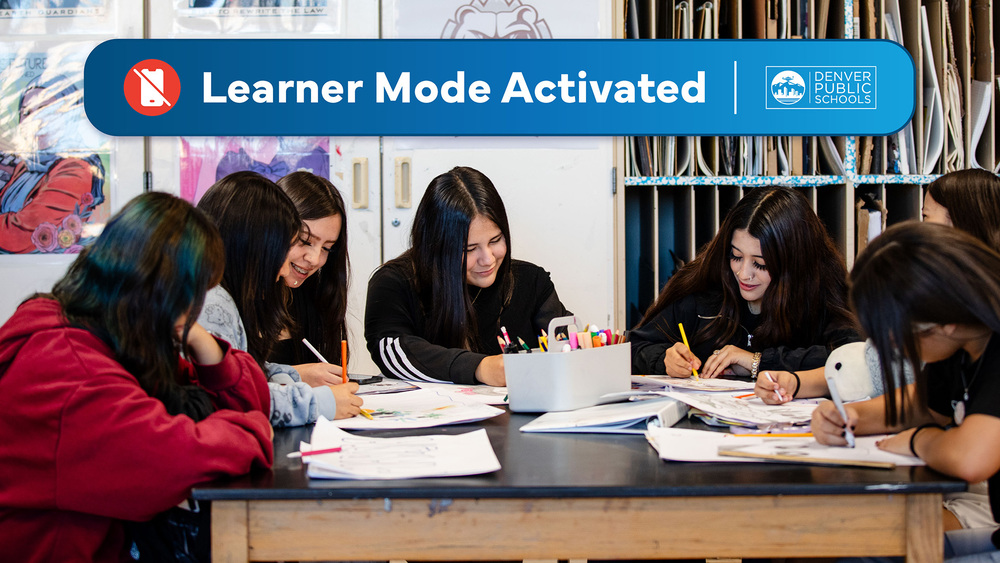
Starting in August 2026, Denver Public Schools (DPS) will implement a strict new policy regarding personal communication devices (PCDs) for all students from preschool through high school. Under the new rules, devices such as cellphones, smartwatches, and wireless earbuds must be turned off and stored out of sight—typically in a locker or backpack—during the entire school day, including lunch and passing periods.
The "Why" Behind the Change
The policy was developed following the passage of Colorado law HB 25-1135, which requires all school districts to enforce an official PCD policy. Beyond legal requirements, DPS cited significant research showing that digital distractions lead to lower grades and test scores, while excessive social media use is linked to mental health challenges like anxiety, depression, and poor sleep.
The district’s goal is to create a learning environment focused on meaningful, face-to-face interactions and academic engagement. Local principals have already noted that similar bans have led to a decrease in "drama" and helped students become "noticeably more present in their learning".
What Students and Families Should Expect
Students are expected to follow these guidelines from "bell-to-bell" while on campus. Key details include:
Storage: Devices must be stored in lockers or backpacks, not in pockets.
Communication: Families should contact the school’s main office to leave messages for students rather than texting them directly.
Emergencies: During school emergencies, students are prohibited from using PCDs, as they can interfere with safety procedures and spread false information.
Exceptions: Students with specific Individualized Education Programs (IEPs), 504 Plans, or medical needs may be granted official exceptions to use their devices.
Enforcement and Accountability
The district will use a four-step enforcement process to ensure the rules are applied fairly:
First Violation: A verbal reminder and a request to put the device away.
Second Violation: The device is confiscated and stored securely until the end of the school day, and a guardian is notified.
Third Violation: The device is held in the main office and will only be returned after a conference with a guardian to create a plan.
Fourth Violation: Increased accountability, which may include daily device check-ins or the loss of the privilege to bring a device to school.
DPS emphasizes that no student will be suspended solely for using a device, as the policy’s primary focus is returning the student to learning.